
Plumbing services in Alhambra, CA
Alhambra Drain Cleaning and Clog Removal: One Slow Drain or the Whole House Backing Up?
A slow sink and a backed-up house are not the same problem. This page helps you tell which one you have, what is safe to try first and what a plumber should do beyond just clearing the clog.
One fixture or the whole house? The question that decides everything
Where the clog is depends on how many drains are affected. Run the quick test below before you reach for a plunger or a phone.
| What is happening | Where the clog probably is | What it means |
|---|---|---|
| One sink or tub drains slowly, everything else is fine | In that fixture's own trap or branch line | Usually a local clog |
| Two or more fixtures on the same floor are slow | In a shared branch line | A bigger local clog or a partial blockage |
| Toilet gurgles and a tub or shower backs up | In the main drain line | Urgent: stop using water |
| Water backs up into a tub when the washing machine drains | In the main line or the line serving the laundry | Stop the washer and call |
| Drains clear, then slow again within days or weeks | Something in the line is catching waste | A recurring clog, not a one-time one |
When more than one fixture is affected, treat the whole house as being on a single line. Stop running water, since every flush and shower adds to what is waiting to back up.
What to try before you call, and what to leave alone
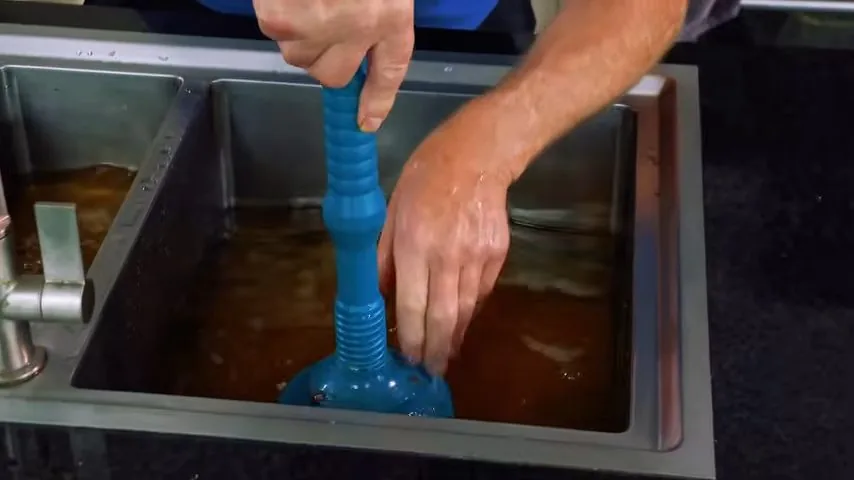
- A plunger is a reasonable first step for a single sink, tub or toilet.
- Clearing the stopper or strainer removes hair and debris that is easy to reach.
- Boiling water is fine for a kitchen sink with grease, but not for plastic pipe joints or porcelain fixtures that are already cracked.
- Chemical drain openers are best avoided. They can damage pipe, are hazardous if they sit in a standing drain and make a plumber's later work less safe.
These steps cannot tell you why the drain clogged or how far the blockage goes. If a plunger gives no result, or if more than one fixture is affected, a plumber can reach what you cannot.
Snake, jet or camera: which method fits the clog?
The right tool depends on what is blocking the line and how the pipe is built. A good plumber will explain the choice instead of defaulting to one.
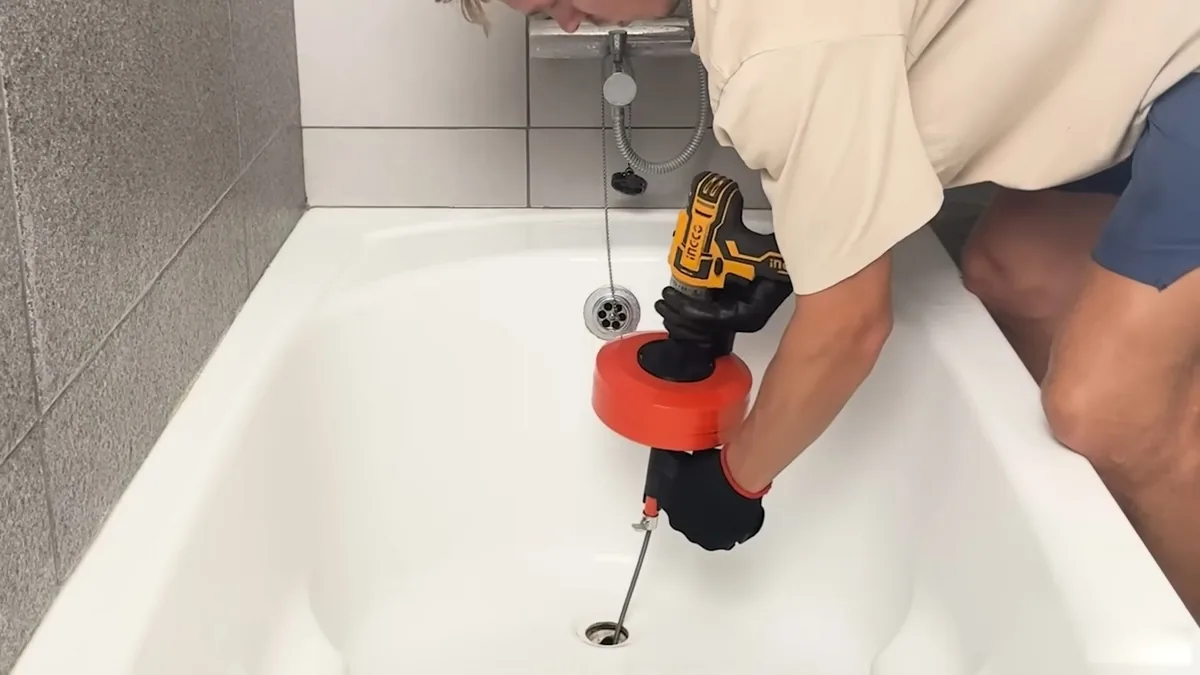
- A drain cable (a motorized snake) clears most ordinary clogs by breaking through or pulling out the blockage.
- Hydro jetting uses high-pressure water to scour grease, scale and roots from the pipe wall. It suits heavier buildup, and what a jetting visit involves is covered on its own page.
- A camera inspection shows what is inside the line, which tells you whether the clog was a one-off or a symptom of damage.
Not sure whether it is a local clog or the main line? Describe which fixtures are affected to a plumber.
Why a camera inspection is worth asking for after the clog is cleared
Clearing a clog treats the symptom. A camera shows the cause. If the line is cracked, bellied, root-filled or full of old scale, the clog will return, and you want to know that before the next backup.
- Ask the plumber to show you the footage, or photos taken from it.
- Ask where in the line any problem was found, and how far from the cleanout or the house.
- Ask what the plumber recommends if the line is damaged, and what the alternatives are.
If the camera finds a damaged sewer line, the next page to read is repairing or replacing a damaged sewer line.

Clogs that keep coming back
A drain that clears and then slows again points to something that keeps catching waste. Common causes are grease coating the pipe wall, roots entering a joint, a pipe that has sagged and holds water, or a buildup of scale.
Tell the plumber the pattern: which drain, how long between clogs and what goes down it. A kitchen line that clogs every month is a grease problem. A line that clogs after heavy rain or after the washer runs is a different problem.
Yard drains, storm drains and the places a plumber is not the right call
Not every drain is an indoor drain. Clearing a French drain or a yard drain is different work from clearing a kitchen line, and a clogged storm drain in the street belongs to the City. Contact the City's Public Works at 626-570-5067 for a public drain. A French drain or yard drain on your own property is different. It can be cleared, repaired or installed, and the answer depends on where the water collects and where the drain outlets, so tell the plumber what you see after rain.
Basement and below-grade floor drains follow the same rule as any indoor drain: if more than one is affected, suspect the main.
Commercial kitchens, grease lines and business drains
Restaurants, cafes and shops run their drains harder than a house does. Grease from cooking, food scraps and heavy daily use mean clogs form faster, and a backup can stop service. Cleaning a commercial kitchen line is often a matter of scheduling and prevention as much as one-off clearing.
- Tell the plumber whether the line serves a kitchen, a bathroom group or floor drains.
- Ask whether a grease trap or interceptor is on the line and when it was last serviced.
- Ask about a cleaning schedule matched to how much you cook, so the next backup is not a surprise.
- Ask for a written record of what was cleared and the camera findings, for your landlord or inspector.
Kitchen exhaust drains and floor drains are part of the same conversation. Describe the layout when you call.
Owners of condos, townhomes and rentals should tell their association or landlord when a drain backs up, since the main line may be theirs to repair.
Drain cleaning paperwork and checking the contractor's license
Ask for a written description of what was cleared, what method was used and what the camera showed. Check the license too. California requires a contractor license for jobs of $1,000 or more, labor and materials together, and the Contractors State License Board has a License Check tool on its website.
Drain cleaning questions
Why does my toilet gurgle when I run the shower?
Gurgling and backing up across several fixtures usually point to a clog in the main drain line, not a single fixture. Stop using water and call a plumber, because every flush adds to what is waiting to back up.
Should I use chemical drain cleaner on a clogged drain?
It is best avoided. Chemical openers can damage pipes, are hazardous if they sit in a standing drain and make later work riskier for a plumber. Try a plunger first, and call if more than one fixture is affected.
Why does my drain keep clogging after it was cleared?
A drain that keeps slowing usually has something that keeps catching waste, such as grease on the pipe wall, roots, a sag in the pipe or scale. A camera inspection can show the cause so that the next clearing is not the same job again.
Drain backing up in your Alhambra home?
Tell us which fixtures are slow, whether more than one is affected and what you have already tried. You will get a clear picture of how serious it is.