
Plumbing services in Alhambra, CA
Alhambra Burst and Broken Pipe Repair: What to Do in the First Ten Minutes and What Comes Next
Water from a burst pipe moves fast, and the first minutes matter more than the repair itself. This page covers what to do right now, how to read the damage and what the repair should involve.
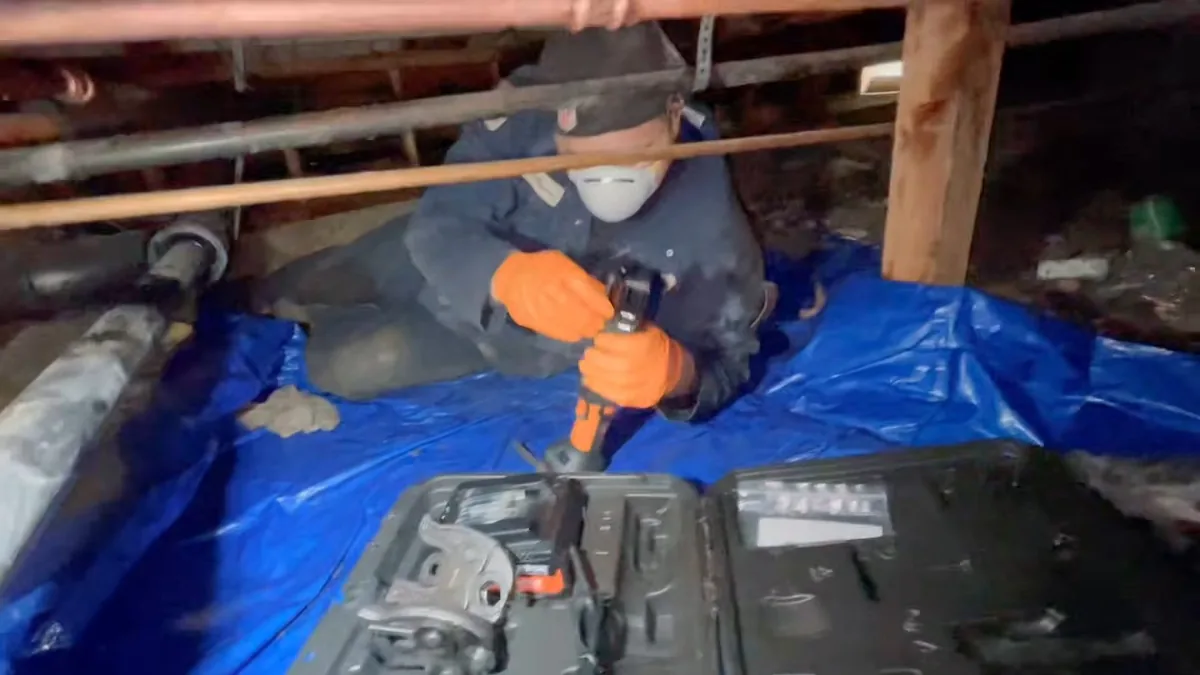
The first ten minutes: stop the water, then protect the house
- Close the main shutoff valve. It is usually where the water line enters the house or near the meter. Turn it fully until it stops.
- Open the lowest faucet in the house, and one upstairs if you have one, to drain the pipes and relieve pressure.
- Stay clear of water near outlets, light fixtures and the panel. Do not step into standing water if the electrical system could be involved. Call a plumber and, if needed, an electrician.
- Move belongings out of the wet area and lift anything that wicks water, such as rugs and boxes.
- Take photos and short video of the source and the damage before you clean up.
- Call a plumber and say whether the shutoff valve closed. A valve that will not close is worth saying first.
If water is coming up through a floor drain, tub or toilet rather than out of a pipe, you have a sewer backup, not a burst supply line. That calls for different steps and is covered under sewer line problems.
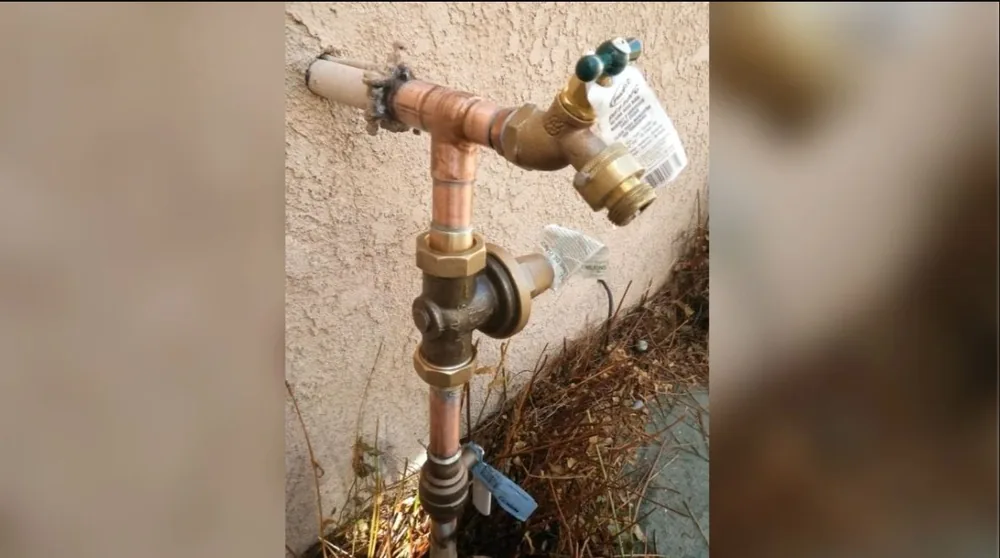
Burst, broken or slowly failing? Reading what you see
| What you see | What it usually means | What to do |
|---|---|---|
| Water spraying or pouring from a pipe | A burst or a fitting that has let go | Shut the main valve and call now |
| A steady drip from a joint or fitting | A failing connection or a pinhole | Shut off the local valve if one exists and call to book a visit |
| A wet wall or ceiling with no visible pipe | A leak inside the wall | Shut off the main, then call. Detection may be needed |
| Hissing in a wall and weak pressure | Water escaping under pressure | Treat as a break and shut off the main |
| Green crust or beads of water on copper | Corrosion at a joint or a pinhole | Call and ask the plumber to check the run |
| Brown or discolored water after a repair | Disturbed sediment, not necessarily a break | Run a cold tap for a few minutes and call if it persists |
A slow or hidden leak is a different job from a burst. Tracing one starts with tracing a slow or hidden leak, which has the meter test.
Why pipes fail here, in a climate that rarely freezes
Alhambra rarely sees the hard freezes that split pipes in colder places, so ice is an uncommon cause of a burst here. We have not claimed any local pipe-material data, because no verified source exists for it. What causes bursts in a mild climate is usually one of these:
- Age and corrosion, especially at joints and fittings.
- High water pressure that strains old pipe and valves.
- Physical damage during other work, such as digging or remodeling.
- A repair that was done years ago and has failed at the joint.
- Movement in the structure that puts stress on a rigid line.
Tell the plumber the age of the house and any earlier repairs. That history shapes whether this is a one-off failure or the first of several.
Water stopped but unsure what comes next? Describe the damage to a plumber and plan the repair.
Repair options once the pipe is exposed
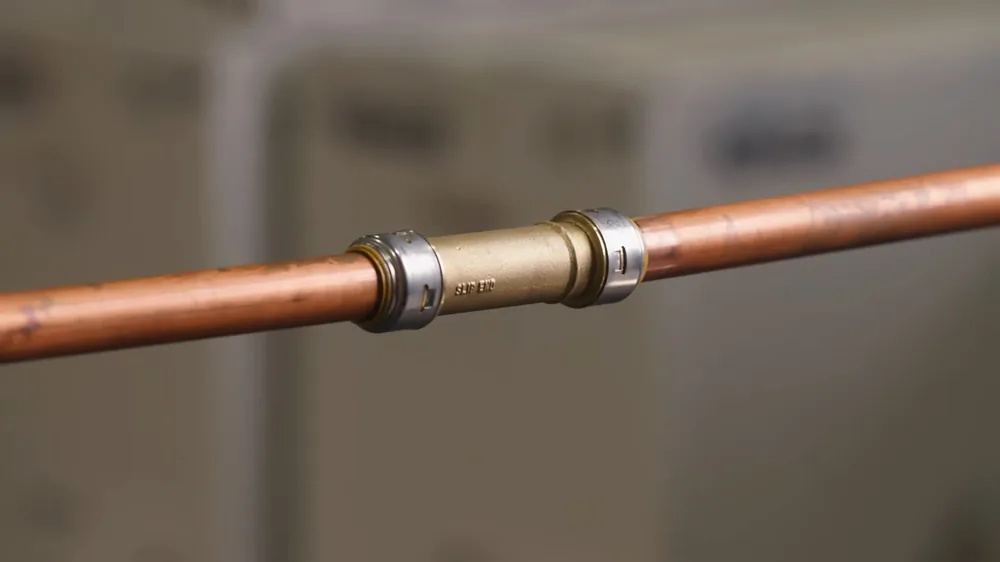
Once the failed section is open, the plumber can usually choose between a few approaches. A short break in otherwise sound pipe may take a repair coupling or a new section spliced in. A badly corroded pipe is a different matter, and cutting out one bad section can leave the neighboring pipe just as tired.
- Replace the damaged section when the pipe on either side looks sound.
- Replace a longer run when the pipe around the break is corroded or thin.
- Think bigger when this is the second or third failure in a short time. At that point, replacing the pipes instead of patching them is worth pricing.
Ask the plumber to show you the removed section and explain what went wrong with it. It is the best evidence for the choice they recommend.
Cleanup, drying and insurance after a burst
The repair stops the water. The damage left behind needs its own plan. Wet drywall, insulation, flooring and carpet pad hold moisture, and damp materials left in place invite mold, so drying matters. Cleanup and drying are handled through the separate water damage line, described on the drying and cleanup after the leak page.
- Call your insurer before heavy cleanup and ask what it needs to see.
- Keep the photos, the plumber's written description of the cause and your receipts.
- Do not throw out damaged materials until the insurer says you can.
- Ask whether your policy treats a sudden burst differently from a slow leak.
Burst pipes in a business or multi-unit building
A burst in a commercial or shared building brings more people into the decision. Start the same way, by closing the nearest shutoff, but be ready for a few extra steps.
- Find out whether the shutoff you closed serves only your space or the whole building. A building-wide valve may belong to the manager.
- Tell the property manager or landlord right away, and any neighbors below or beside the leak.
- Protect stock, equipment and records, and move electronics out of the water.
- Call your insurer and ask about business interruption cover as well as property damage.
- Photograph everything and keep the plumber's written note of cause and scope.
Describe the building, the number of floors and tenants and where the water is going, so the plumber knows what to expect on arrival.
What to ask the plumber on a burst-pipe call
- Where exactly the pipe failed and what caused it, in plain words.
- Whether the repair is a section, a longer run or a sign of wider trouble.
- Whether the work needs a City permit. The City of Alhambra's Building Division lists plumbing permits for piping and re-piping, so call to confirm for anything beyond a small repair.
- Who will close up the wall afterward, and whether that is part of the quote.
- License details, in writing. California requires a contractor license for jobs of $1,000 or more, labor and materials together, and the Contractors State License Board has a License Check tool.
On a weekend, the City's Customer Service Center is closed Friday through Sunday and on holidays, and its page lists no after-hours leak line, so the shutoff valve in your house is your tool.
Burst pipe questions
What should I do first when a pipe bursts?
Close the main shutoff valve, then open the lowest faucet to drain the lines. Stay away from water near outlets, light fixtures and the panel. Take photos of the damage and call a plumber, saying whether the valve closed.
Do pipes freeze and burst in Alhambra?
Alhambra rarely sees hard freezes, so ice is an uncommon cause here. Bursts in a mild climate more often come from age, corrosion, high pressure or earlier repairs. A plumber can tell you what caused yours.
Who handles the water damage after a burst pipe?
The plumber repairs the pipe. Drying and cleanup are handled separately through the water damage line. Call your insurer before heavy cleanup and keep photos and receipts.
Pipe burst in your Alhambra home?
Close the main shutoff first, then call. Tell the plumber where the water is coming from and whether the valve closed.